
Government Environmental Approvals for the Gonneville Project
In March, Chalice referred the Gonneville Project for government environmental approvals – seeking approval from State and Commonwealth governments to develop the Project into a mine on Chalice-owned farmland.
For more details of the Project proposal and approvals processes, visit the new Gonneville Project website
| Location | ~70km NE of Perth, Western Australia |
|---|---|
| Project Stage | Resource; Feasibility and Permitting |
| Acquired | Exploration licenses staked in 2018 |
| Ownership | 100% |
The Gonneville Platinum Group Element-Nickel-Copper-Cobalt (PGE-Ni-Cu-Co) is a development project located on Chalice-owned farmland, in Western Australia. The Project is centred on the Gonneville Deposit – a significant greenfield mineral discovery by Chalice’s geologists in early 2020.
The Gonneville Resource hosts a rare mix of critical minerals required for decarbonisation and urbanisation, such as palladium, platinum, nickel, copper and cobalt. Largescale deposits like Gonneville are very rare and therefore have high strategic value, as current production of PGE metals is dominated by Russia and South Africa and significant supply shortages are predicted.
In August 2023 the Company completed a Scoping Study for the Gonneville Project (Project), which outlined a new long-life, low-cost, low-carbon critical minerals mine in Western Australia with the potential to deliver strong financial returns and regional benefits. Following completion of the Scoping Study, a Pre-Feasibility Study was commenced to determine the optimal development pathway for the Project.
In July 2024 Chalice signed a strategic Memorandum of Understanding (MOU) with Mitsubishi Corporation to work together on the Pre-Feasibility Study (PFS). The MOU establishes a framework for collaboration on technical, financing, marketing and offtake aspects of the Project, with the intention of forming a potential binding partnership within 90 days of PFS completion. Mitsubishi is one of Japan’s largest conglomerates and a leading global natural resources investor with a successful track record of partnering with global mining companies to fund and develop major mining projects.
Chalice recognises the need to develop the Gonneville Project sustainably and responsibly, with a commitment to responsible environmental, social and cultural heritage management, and contribution to the local economic development.
Government Environmental Approvals for the Gonneville Project
In March, Chalice referred the Gonneville Project for government environmental approvals – seeking approval from State and Commonwealth governments to develop the Project into a mine on Chalice-owned farmland.
For more details of the Project proposal and approvals processes, visit the new Gonneville Project website
Location
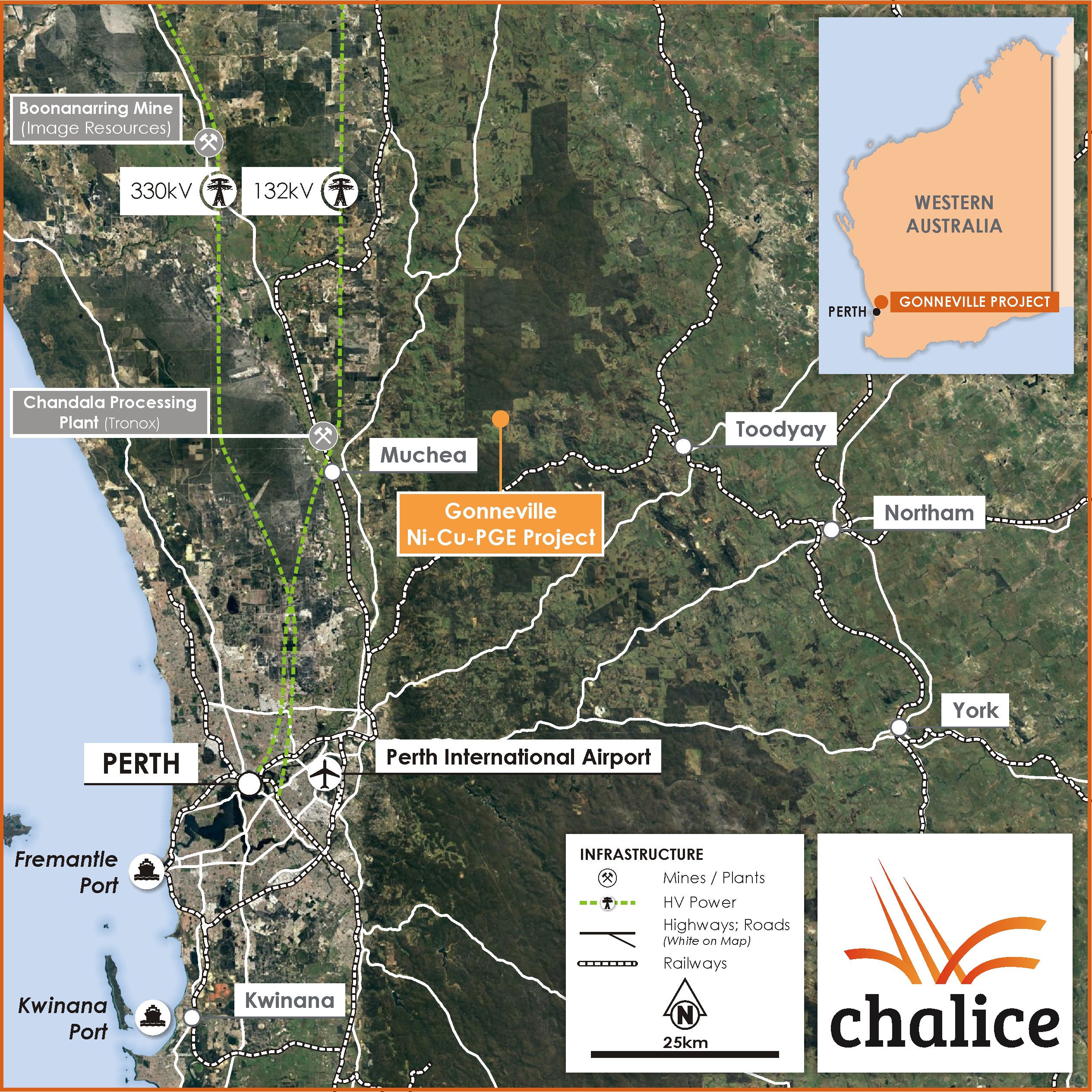
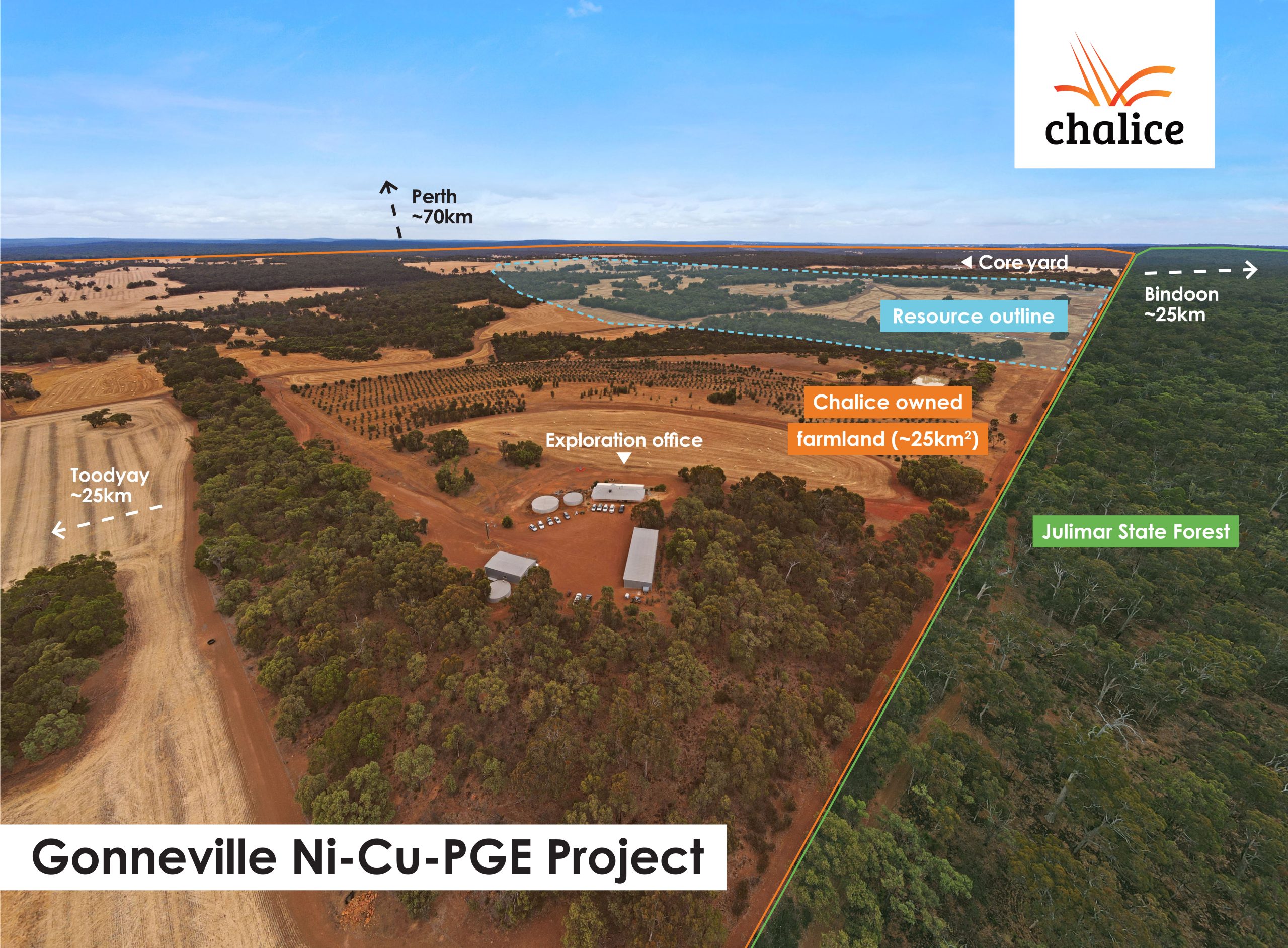
The 100%-owned Gonneville PGE-Ni-Cu-Co Project is located on Chalice-owned farmland ~70km north-east of Perth, Western Australia.
Being proximal to Perth, the region has excellent nearby infrastructure including high-voltage power, rail, sealed highways and deep-water ports, plus access to a significant highly skilled workforce.
The Gonneville discovery has opened up a new unexplored mineral province, the West Yilgarn Ni-Cu-PGE Province in Western Australia. Chalice has a first-mover advantage in the new province and is progressing exploration activities across the West Yilgarn concurrently with development activities at Gonneville.
Geology & Resource
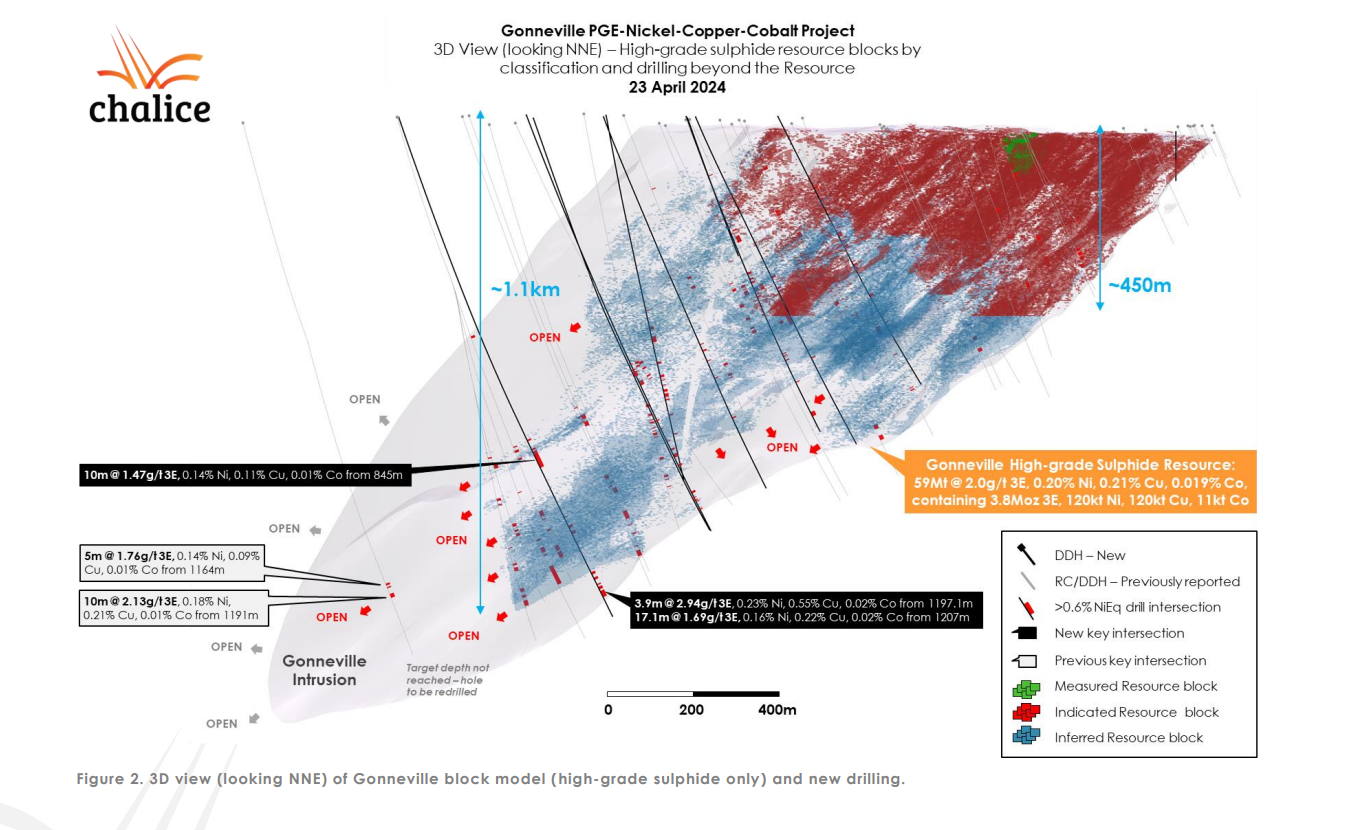
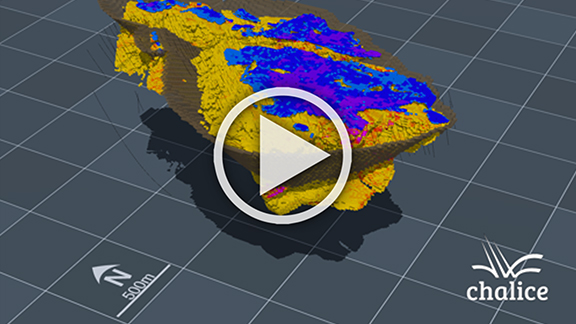
The Gonneville Deposit (Deposit) is located at the southern end of a newly recognised >30km long geological belt, the Julimar Complex. The mafic-ultramafic intrusive belt is prospective for magmatic sulphide mineralisation. The Gonneville Deposit has a rare chonolith-like geometry, which is similar to other major mafic-ultramafic orthomagmatic systems worldwide that host some of the world’s largest nickel copper+/-PGE deposits, including Norilsk-Talnakh and Jinchuan (Barnes et al, 20161).
The Deposit has been drilled to ~1,200m below surface. Primary PGE-Ni-Cu-Co sulphide mineralisation occurs principally within the ultramafic domains of the Gonneville Intrusion and to a lesser extent in gabbro subunits. Mineralisation occurs as a series of sub-parallel sulphide-rich zones (>20% sulphides), typically 5m to 40m wide, that occur within broader intervals (100m to 150m wide) of weakly disseminated sulphides.
A combination of RC and diamond drilling has been completed at the Deposit to define a tier-1 scale Mineral Resource Estimate (Resource). Ongoing wide-spaced step-out drilling continues at Gonneville to determine the overall scale of the Deposit and define extensions to the underground Resource, which remains open at depth.
Gonneville Mineral Resource Estimate (MRE) – 23 April 2024
| Classification* | Mass | Grade | Contained Metal | ||||||
|---|---|---|---|---|---|---|---|---|---|
| Mt | 3E (g/t) | Ni (%) | Cu (%) | Co (%) | 3E (Moz) | Ni (kt) | Cu (kt) | Co (kt) | |
| Measured | 2.9 | 1.20 | 0.21 | 0.17 | 0.018 | 0.12 | 6.1 | 4.8 | 0.52 |
| Indicated | 400 | 0.79 | 0.15 | 0.087 | 0.015 | 10 | 610 | 370 | 65 |
| Inferred | 250 | 0.80 | 0.15 | 0.076 | 0.014 | 6.4 | 370 | 200 | 37 |
| Total | 660 | 0.79 | 0.15 | 0.083 | 0.015 | 17 | 960 | 540 | 96 |
Gonneville High-grade Mineral Resource Estimate (MRE) – 23 April 2024
| Classification* | Mass | Grade | Contained Metal | ||||||
|---|---|---|---|---|---|---|---|---|---|
| Mt | 3E (g/t) | Ni (%) | Cu (%) | Co (%) | 3E (Moz) | Ni (kt) | Cu (kt) | Co (kt) | |
| Measured | 0.77 | 2.8 | 0.37 | 0.35 | 0.026 | 0.068 | 2.8 | 2.7 | 0.2 |
| Indicated | 35 | 1.9 | 0.21 | 0.23 | 0.019 | 2.1 | 73 | 80 | 6.8 |
| Inferred | 23 | 2.1 | 0.19 | 0.17 | 0.018 | 1.5 | 44 | 39 | 4.1 |
| Total | 59 | 2.0 | 0.20 | 0.21 | 0.019 | 3.8 | 120 | 120 | 11 |
For further details, refer to the Company’s ASX Announcement “Gonneville Resource remodelled to support selective mining” dated 23 April 2024.
Development Studies
In August 2023, Chalice completed a Scoping Study for the Gonneville Project, which outlined a new long-life, low-cost, low-carbon critical minerals mine in Western Australia with the potential to deliver strong financial returns and regional benefits, plus significant upside.
The Study outlined a tier-1 scale development project in a world-class jurisdiction:
- Two open-pit cases modelled reflecting significant development optionality – with early underground options in parallel with open-pit mining to be investigated in future.
- ~240Mt and ~440Mt open-pit resources processed (45-80% of the Gonneville Resource) for the 15Mtpa and 30Mtpa cases respectively, generating a tier-1 production profile:
| Case | 3E (Pd+Pt+Au) (kozpa) | Ni (ktpa) | Cu (ktpa) | Co (ktpa) | Modelled Life (yrs) |
|---|---|---|---|---|---|
| 15Mtpa | ~280 | ~9 | ~10 | ~0.8 | ~19 |
| 30Mtpa | ~470 | ~16 | ~16 | ~1.4 | ~18 |
- Long-life, tier-1 scale production profile provides significant leverage to critical minerals which are in strong demand from global decarbonisation and urbanisation trends.
The production targets and forecast information disclosed above is extracted from the Company’s ASX Announcement “Gonneville Nickel-Copper-PGE Project Scoping Study” dated 29 August 2023.
Chalice has commenced the Pre-Feasibility Study (PFS), targeted for completion in mid-2025, which will assess several development cases with the aim of determining the preferred case to progress to a Feasibility Study. The large scale, shallow polymetallic Gonneville Resource has inherent development optionality which required ongoing detailed optimisation work as part of the PFS.
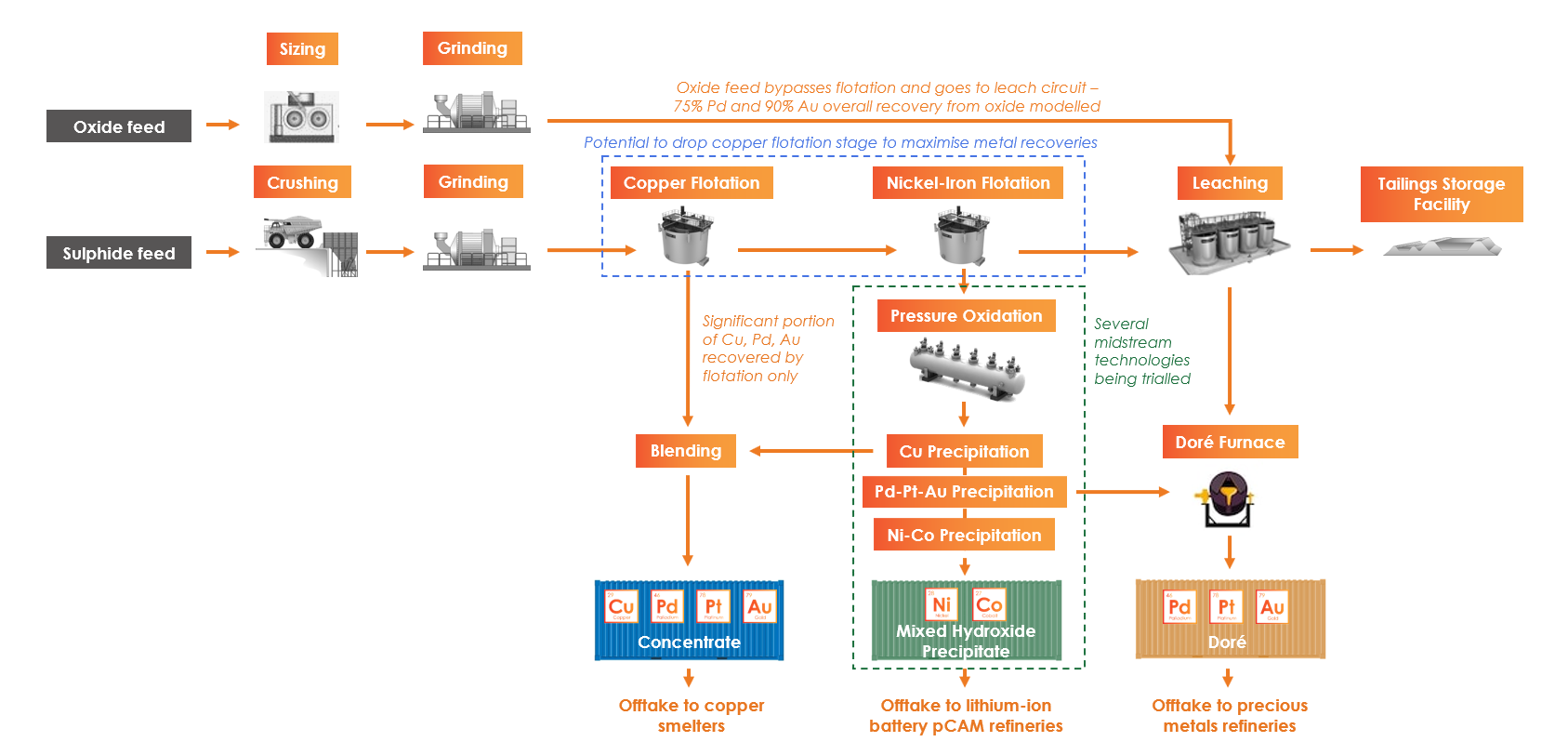
Metallurgical testwork, process flowsheet design and optimisation is continuing. The Study assumes that Gonneville is currently scoped to produce a copper smelter concentrate (Cu-Pd-Pt-Au) for sale to a copper smelter, a Mixed Hyroxide Precipitate (Ni-Co) for sale to a precursor cathode active material (PCAM) refinery and potentially a PGE-Au doré for sale to a PGM refinery.
Chalice also commenced the regulatory approvals process for the Project in March 2024, based on a development envelope located entirely on Chalice-owned farmland.
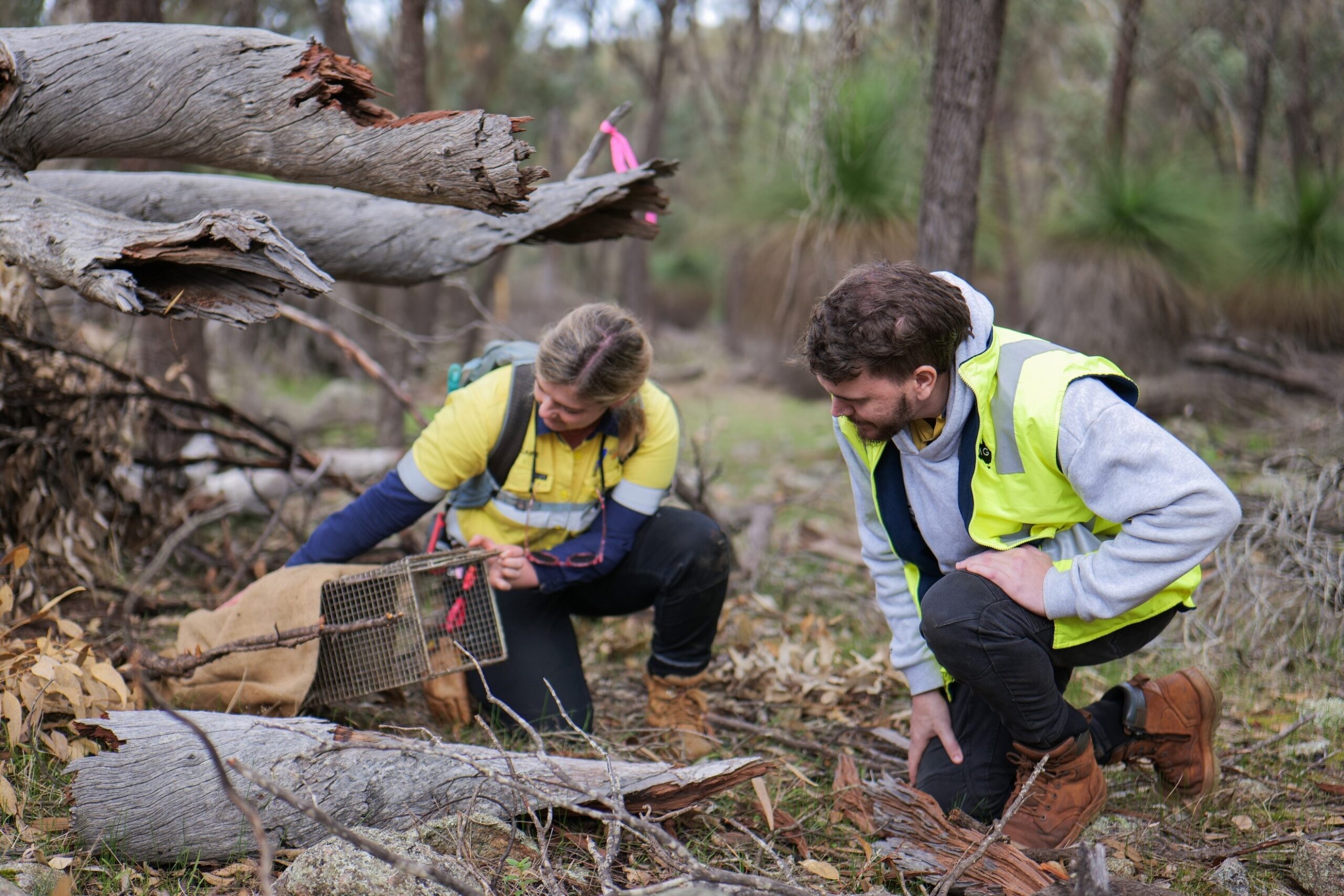
Surveys of ground water, surface water, flora, fauna and dieback continue as part of the long-term baseline and monitoring program, designed to support engineering studies and environmental assessments.
Sustainability
Chalice recognises the need to develop the Gonneville Project sustainably and responsibly, with a best practice approach to environmental, social and cultural heritage management, and to contribute to local economic development.
As part of this commitment, Chalice has developed the Gonneville Biodiversity Strategy which sets a goal to ensure a science-based no net loss of species or habitat diversity as a result of our operations. An innovative program of work is planned to rehabilitate areas of remnant vegetation, form ecological corridors and reduce habitat fragmentation.
Chalice is proud to be part of the communities surrounding the Gonneville Project, and is committed to prioritising local employment, supporting local businesses and investing locally to create long lasting benefits.
Chalice has built a strong relationship with Traditional Owners and continues work to understand the cultural values of the Gonneville Project area. The Company has also collaborated with Whadjuk representatives on our ongoing baseline fauna surveys.
1 Barnes SJ, Cruden A.R, Arndt, A & Saumur, B., 2016. The mineral system approach to magmatic Ni-Cu-PGE sulphide deposits. Ore Geology Reviews 76, 296-316.
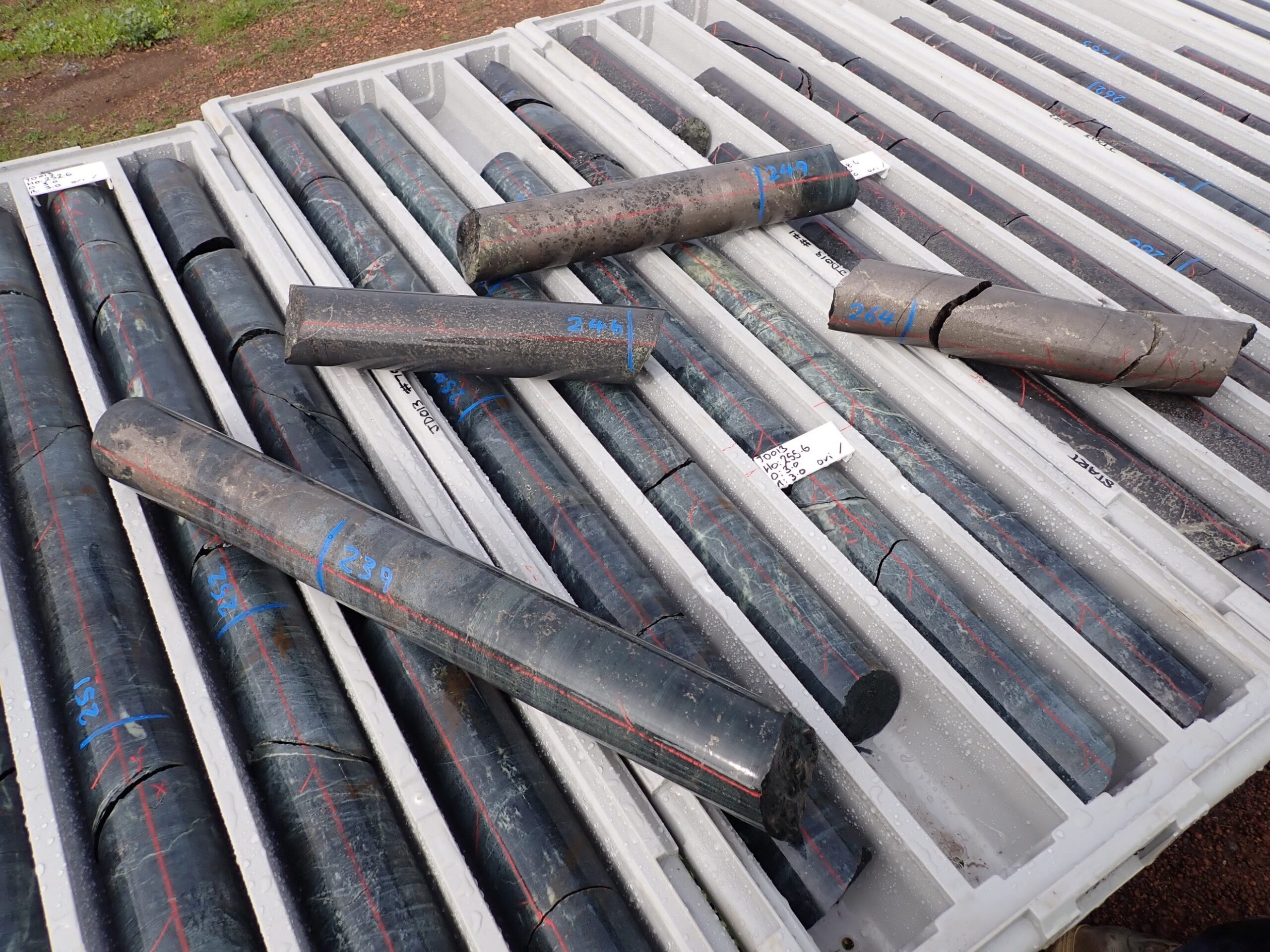
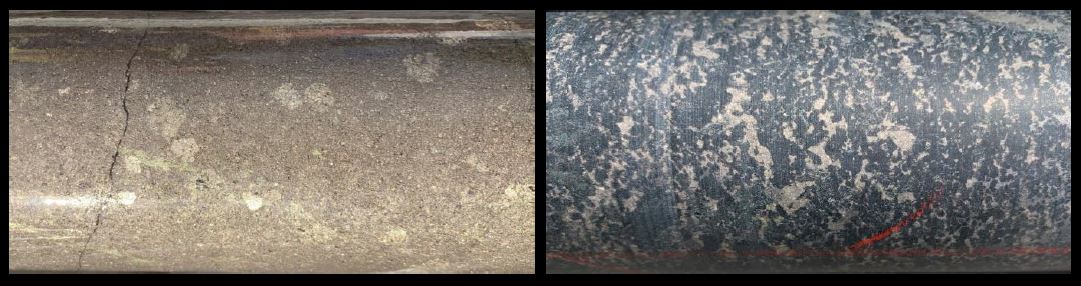
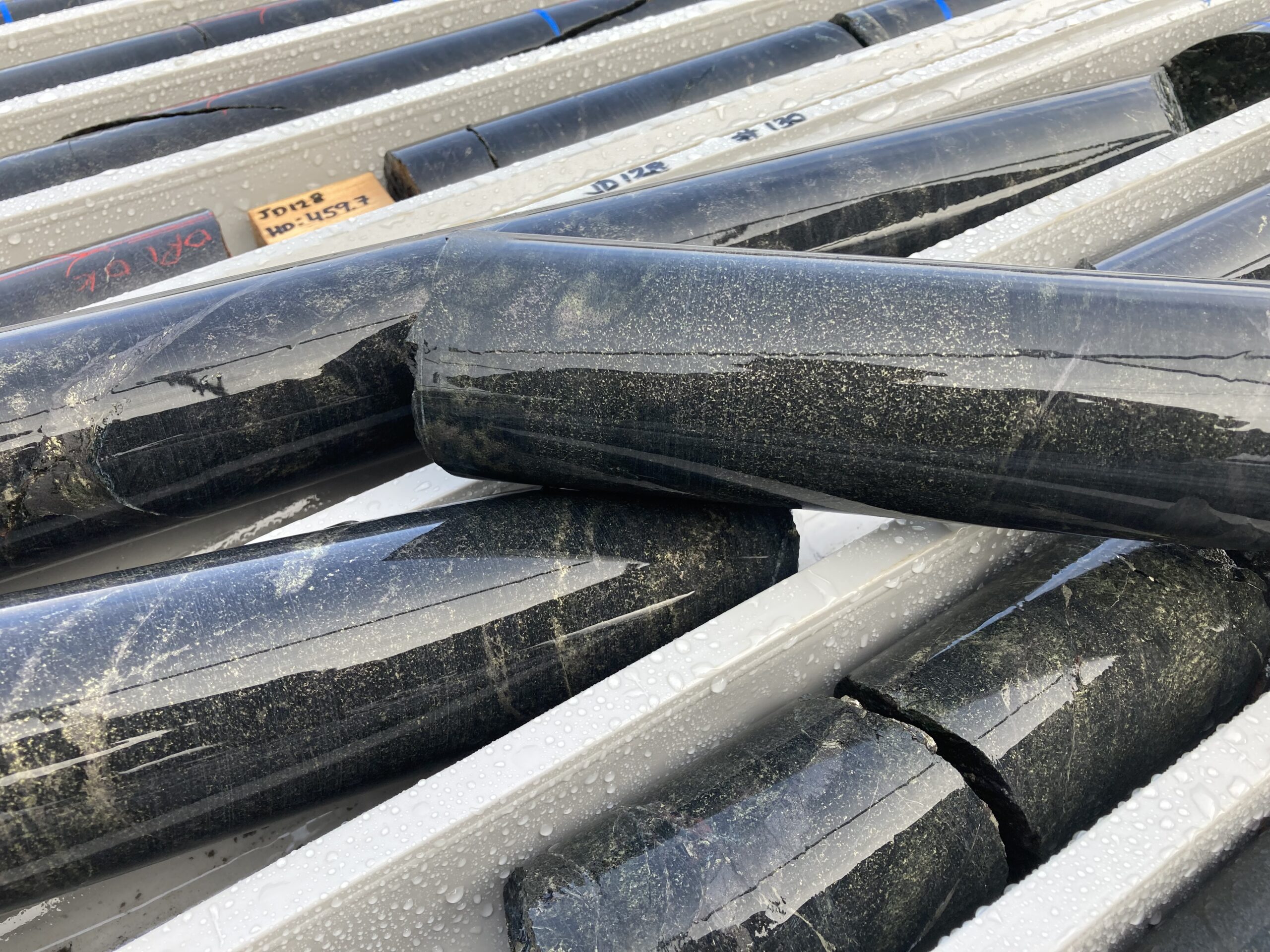
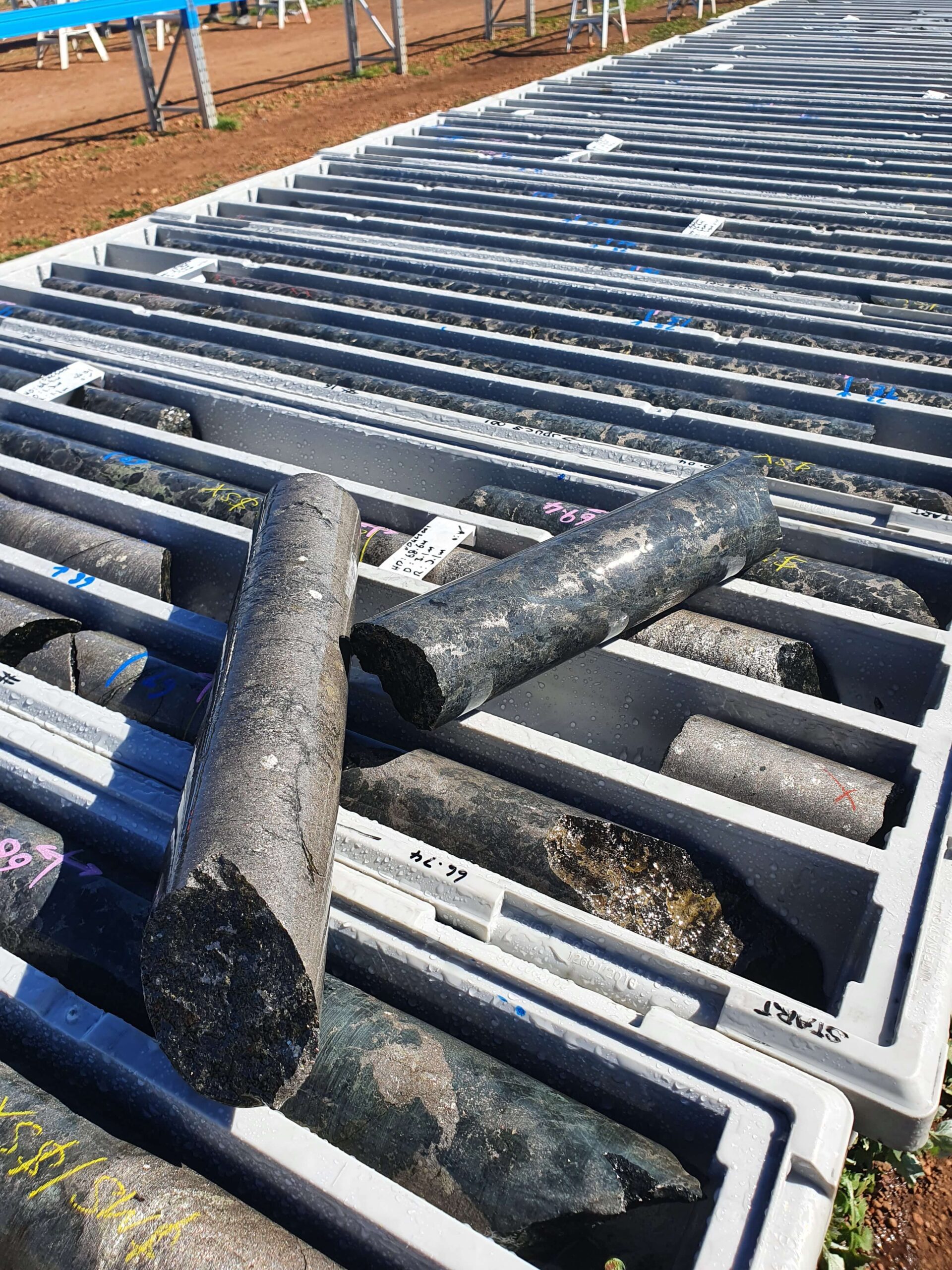
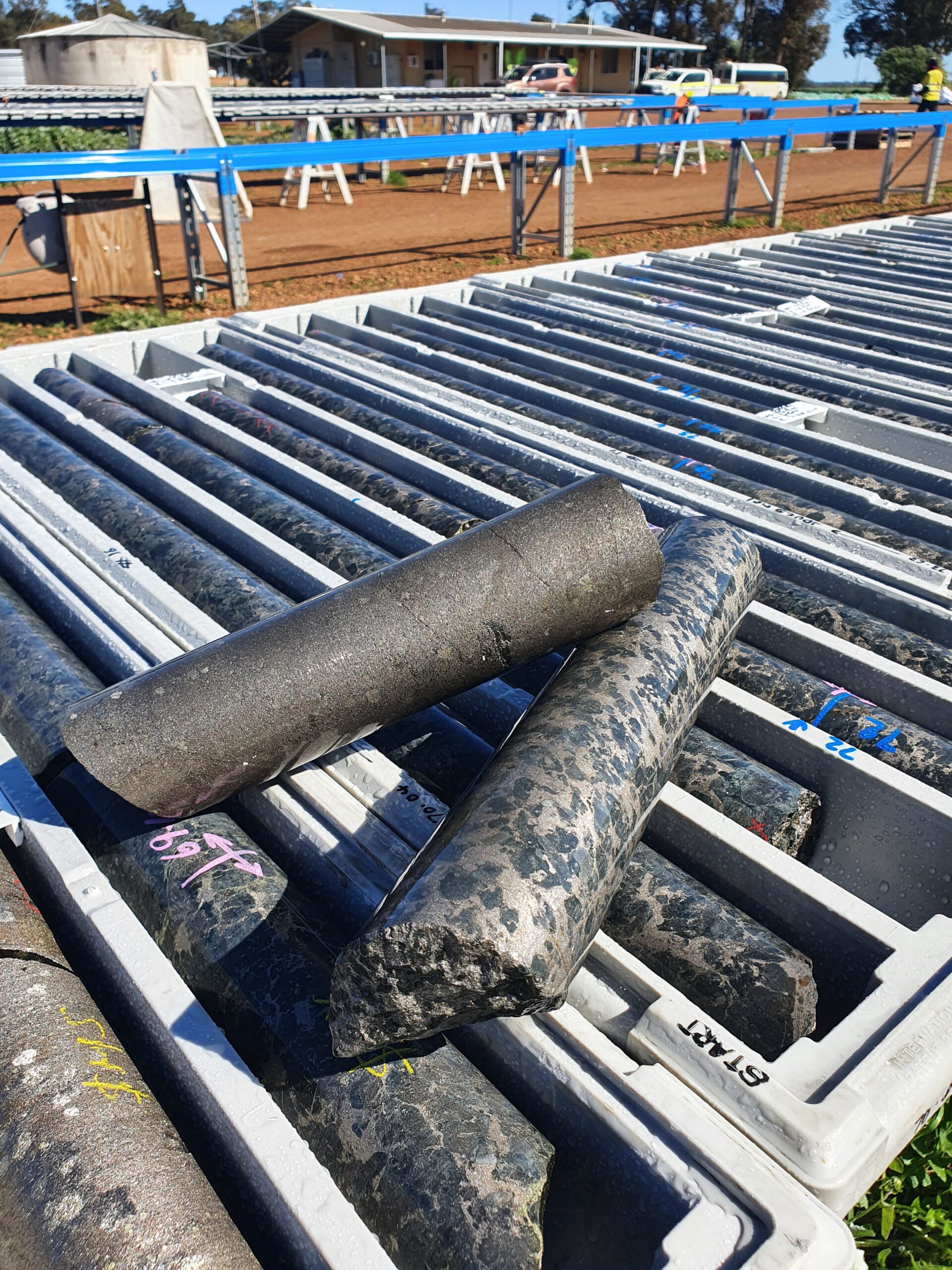
Core Gallery
See gallery for assorted Gonneville Project core samples.